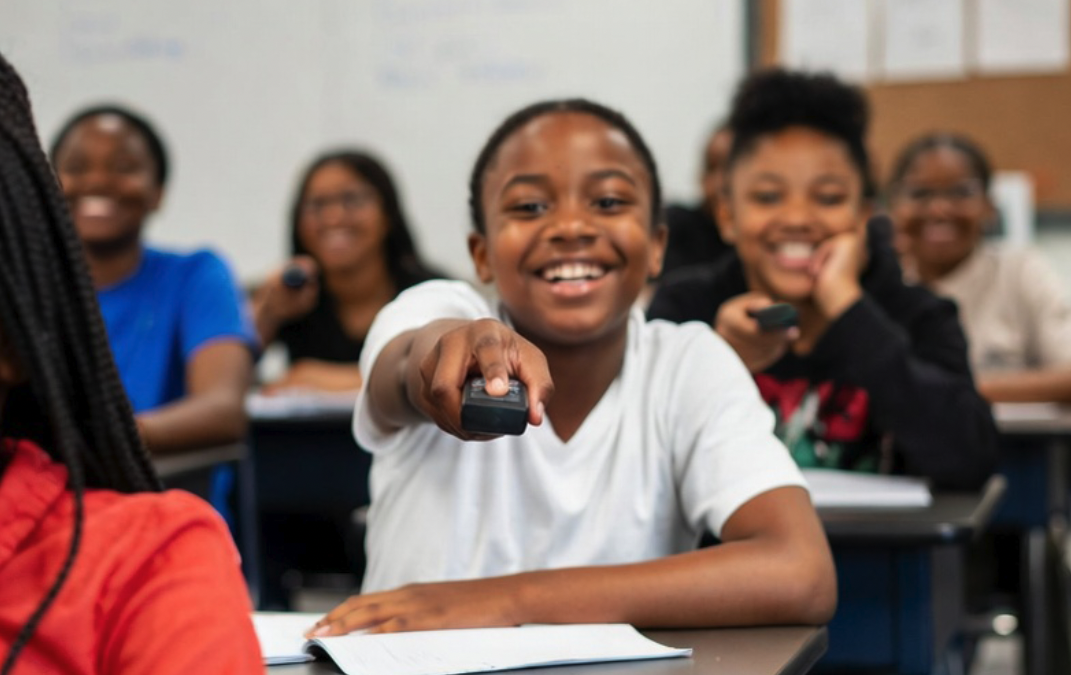
In a classroom in Memphis, a teacher poses a question and, within seconds, every student responds. There are no logins, no devices to troubleshoot, and no notifications pulling attention away. Students keep their eyes on the front of the room, thinking and answering together. The results appear instantly—no grading required—so the teacher adjusts instruction in the moment and moves on. What might have been a pause becomes momentum.
Scenes like this are becoming more common as clickers quietly return to more classrooms.
At the same time, a broader shift is underway. As 1-to-1 devices have become nearly universal in classrooms over the past decade, international assessments have shown declines in student performance across many high-adopting countries—especially those that moved fastest and furthest toward screen-based learning.
For many teachers, the data simply confirms what they’ve been noting for years: when screens are used in classrooms, student attention, engagement, and depth of thinking can be reduced compared to more traditional, low-distraction instructional approaches.
Additionally, research has raised concerns about the effects of heavy screen use on student mental health, attention, and social development. In response, schools and states are beginning to limit access to devices during the school day. In some cases, even beneficial classroom uses are being reconsidered as the broader trade-offs come into focus. As a result, devices may become less available—and less relied upon—for many of the classroom roles they once filled.
This growing recognition is fueling the quiet comeback of clickers—not as a rejection of technology, but as a way to enable instant feedback and consistent whole-class participation without the distractions and management overhead that full-screen devices can bring.
A Lesson from Silicon Valley
At the same time, another notable pattern has emerged: many Silicon Valley executives choose schools for their own children that limit screen use and instead prioritize focus, creativity, and human interaction, even including tech-free schools.
This contrast is more than anecdotal. It reflects a broader recognition that the conditions that support deep thinking—sustained attention, meaningful interaction, and active participation—are not always aligned with high-frequency device use.
For educators, this raises an important question: if low-distraction, high-engagement environments are seen as ideal for learning in some of the most informed circles, how should schools think about balancing technology and attention in everyday classrooms?
Finding the Right Balance
The challenge for schools is to ensure that technology is supporting learning rather than competing with it.
Screens can increase efficiency, expand access to content, and support a wide range of learning experiences. Students also need equitable access to digital tools and opportunities to build familiarity with them.
But every tool has its strengths and weaknesses. When overused or used at the wrong moments, screens can interfere with learning by introducing distraction, increasing cognitive load, and weakening sustained focus.
The renewed interest in clickers reflects this tension. They bring many of the advantages of technology—efficiency for teachers, immediacy for students, and quick, actionable data consistent with research on high-impact school strategies like this study—without many of the disadvantages associated with screen-based devices.
Clickers allow every student to participate instantly, regardless of technical proficiency or outside support. By removing unnecessary barriers and competing inputs, they keep attention anchored in the learning experience. And because they are reliable and consistent, more time is spent on learning rather than logistics.
Increasingly, schools are making a conscious effort to protect spaces for sustained attention, participation, and thinking. And, many states are moving toward policies that limit use of screened devices in various ways.
Screens Still Have a Place
None of this suggests that screen devices should disappear completely from classrooms. They remain essential for:
- research and information access
- multimedia creation
- simulations and interactive content
- periodic practice with computer-based state tests
But as we have seen, screens aren’t the only tool for every situation, and some states are now formalizing those concerns in policy.
Closing: Clickers Stepping Into the Right Gap
In many classrooms, moments that became dominated by full-screen devices were never the right place for them.
Those moments during daily instruction that need effective use of time, focus on classroom instruction, and high-efficiency data collection are a better fit for a low-distraction, tactile clicker that gets students’ eyes up front with no downtime.
Their impact is even greater when their data is not siloed, but is part of a broader system that uses a range of tools, from screen-based activities to AI handwritten-work analysis and feedback, each in its appropriate role, with all data accessible in one place.
Many people – including some of those most familiar with cutting edge tech – are now themselves looking to older, time-tested methods of teaching. But clickers are not a step backward – they can simply be the best tool for some of the most important moments in the classroom.
About the Author
Joel Dennis has spent 25 years partnering with teachers and leaders in struggling K–12 schools. He advocates for the idea that when feedback is fast and tools are easy, schools can sustain the use of formative, data‑driven practices, maintain fidelity across classrooms, and make full‑context progress data visible for more responsive instructional, accountability, and resource decisions.